
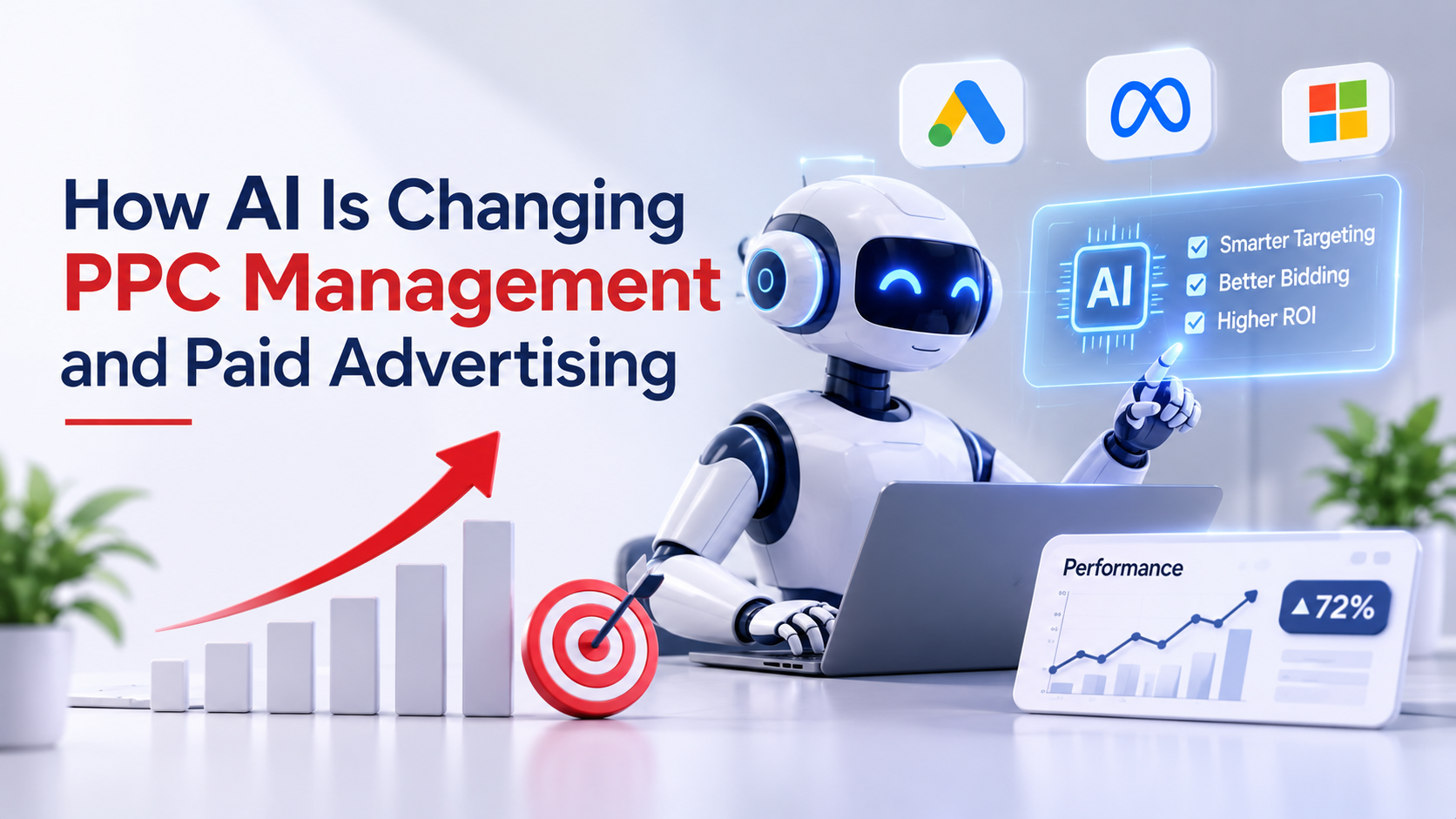
A paid advertising campaign can bring hundreds of visitors to a website and still fail to generate enough business. Sometimes the ads attract the wrong audience. In other cases, visitors click but leave without enquiring or making a purchase. Artificial intelligence (AI) is changing how marketers use PPC management services to identify these problems and manage campaigns. From adjusting bids to testing different ad messages, AI can speed up several tasks. The real challenge is knowing which changes are worth making and whether they lead to better business results.
1. AI Is Changing Everyday PPC Management
Managing a PPC campaign is a lot more than choosing keywords and setting up a daily budget. Marketers also have to review search terms, watch conversions, test ads, and decide where the next chunk of the budget should go. Understanding the broader applications of AI through this artificial intelligence guide can also help marketers identify how emerging technologies are influencing modern advertising strategies.
AI can handle some of this repetitive work, allowing marketers to dig into performance and plot their next moves. This change can be beneficial for businesses running complex ad accounts, especially if they are managing multiple campaigns across different products or locations.
Some common applications include:
- Bid adjustments: Machine learning helps advertising platforms adjust bids using available auction-time signals.
- Search-term analysis: AI tools can help detect trends in search queries and highlight potentially irrelevant traffic.
- Ad variations: Generative artificial intelligence can generate alternative headlines and descriptions to test.
- Performance monitoring: Automated analysis can alert you to unusual changes in spend, clicks or conversions.
These tools may speed up campaign management, but speed does not equal better results. The information used to guide decisions must still be accurate and relevant.
2. Automated Bidding Needs the Right Conversion Data
Google Ads uses machine learning to adjust bids towards objectives such as generating conversions or achieving a target return on ad spend. This can reduce the need for manual bid adjustments, particularly when a campaign has good data.
But there’s a difference between driving conversions and attracting customers who are likely to buy.
What if a software company was running ads for a product demo? The campaign gets 100 demos requested, but only 15 come from companies that are a fit for the target market. If the value of each submission is equal, the automated bidding may still attract those who fill out the form, but are not really interested in buying.
Marketers can reduce this problem by:
- Checking whether conversion tracking records meaningful actions.
- Separating qualified enquiries from duplicate or irrelevant submissions.
- Connecting advertising data with sales outcomes where possible.
- Reviewing lead quality alongside acquisition costs.
For a business investing in PPC Management Services, these checks help ensure that campaign optimization supports actual sales rather than simply increasing the number of recorded conversions.
3. Audience Targeting Is Becoming More Contextual
Someone searching for business software could be searching for options, comparing vendors or ready to buy. By showing the same advertisement to everyone, these differences may be missed.
AI-powered advertising tools can help detect patterns within campaign data, and inform targeting decisions. Then marketers can test messages designed for different customer needs.
For instance, a company that sells cybersecurity software to mid-sized companies may want to target IT managers who are comparing security solutions, not people looking for general tips on staying safe online.
A paid advertising agency can fine-tune this approach by looking at:
- Search terms that reflect a true buying need.
- Audience segments generating qualified inquiries.
- Negative keywords to exclude irrelevant searches.
- Landing pages that live up to the promise of the ad.
The goal is not to reach the widest possible audience. It tries to reach people whose needs match the product and who have a reasonable chance of becoming customers.
4. AI Can Speed Up Ad Copy and Creative Testing
Writing advertisements for several products or customer groups can be time consuming task. Marketers may use generative AI to generate initial copy, test different approaches, and create variations for testing.
Consider a scenario where you’re selling project management software to a company. One ad might be about not missing deadlines; another could be about making it easier to work together between departments. They’re talking about the same product. But, they’re talking about different concerns.
These variations can be used by an AI powered performance marketing agency to test which message resonates with the target audience.
The quality of the test matters, not the quantity of ads produced. Before any new copy is launched, marketers should check that:
- All product claims are true and verifiable.
- Each version has a different advantage.
- The wording is in line with the brand’s usual tone.
- The ad is in compliance with the platform’s policies.
AI-generated copy is a starting point, not a replacement for knowing the customer. Even a well-crafted message may not resonate if it does not address a real reason to buy.
5. Campaign Reporting Can Reveal Problems Earlier
Advertising dashboards contain plenty of numbers, but identifying the reason behind a performance change often takes more work than reading the figures themselves.
Suppose the cost per lead rises over a week. The increase might result from stronger competition, less relevant search traffic, a landing page problem, or a change in conversion tracking. Cutting bids immediately may not solve any of these issues.
AI-assisted reporting can flag unusual movements and help marketers decide where to investigate first. A Google Ads Agency can use these insights to focus campaign reviews on questions such as:
- Are clicks increasing while conversions remain unchanged?
- Have certain search terms started attracting the wrong visitors?
- Is the landing page turning visitors into enquiries?
- Are incoming leads useful to the sales team?
These questions help put advertising metrics into context. Cheap clicks are of little value when visitors never convert, while higher acquisition costs may be justified if the campaign brings in more valuable customers.
Conclusion
AI is transforming paid advertising, allowing PPC management services to make faster campaign adjustments and give marketers the opportunity to test with less manual work. But value is dependent on the information it receives, and the outcomes a business decides to measure.
Companies that connect advertising data to sales results, test changes carefully and focus on customer quality are better placed to benefit from automation. The goal is not to automate all decisions. The goal is to leverage AI to create value, while keeping advertising focused on attracting the right customers and delivering meaningful business.